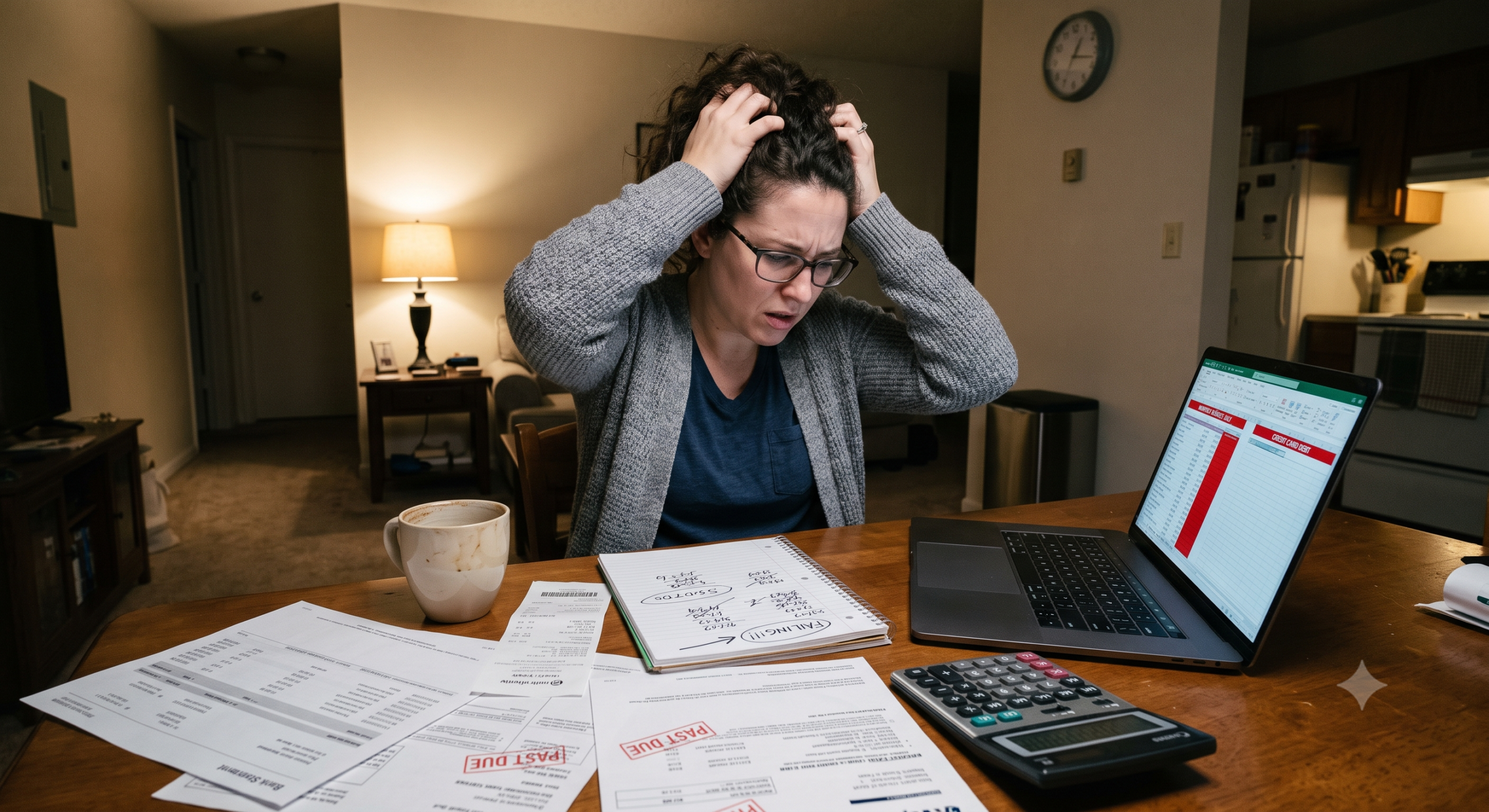
Let’s start with a question that comes up in almost every conversation I have with women about money:
“Why didn’t anyone teach me this at school?”
Why did we spend hours learning about trigonometry and the periodic table, but not how to budget, invest or understand our super?
Why didn’t someone explain credit cards, or taxes, or what happens when you say “yes” to Afterpay?
You’re not imagining it. We were never taught financial literacy – not in any meaningful, real-world way. And it’s left a lot of us playing catch-up in adulthood.
But here’s the thing. It’s not your fault. The system was never designed for the world we’re living in now.
The School Curriculum Was Written for a Different World
The Australian school curriculum was created decades ago, long before we carried mini banks in our pockets.
Back then, most people were paid in cash. You could see your money. You could feel it leave your hand. There was no tap and go, no Afterpay, no “Buy now, pay later.”
If you didn’t have the cash, you simply didn’t buy the thing.
Now, money is invisible. It moves with a swipe, a click, or a thumbprint. And because it’s invisible, it’s easy to lose touch with it.
Our education system never caught up. It’s still teaching us how to pass exams in a world that no longer exists, not how to manage money in a world that never sleeps.
The Money Silence Problem
There’s another reason too, for generations, money was a taboo topic.
Talking about it was considered rude or unladylike. It wasn’t dinner-table conversation. It wasn’t modelled at home, especially for girls.
So we grew up thinking money was something we should just “figure out” later. Except later comes fast. And suddenly, you’re navigating credit cards, super, HECS debt, mortgages, rising rent and the cost of living – all without a map.
The silence has cost us confidence.
But that ends here.
The Reality of Modern Money
The truth is, the world has changed faster than the way we teach it.
We now have:
- Credit cards with instant approvals.
- Tap and go payments that make spending effortless.
- Online shopping that’s open 24/7.
- Buy Now Pay Later services that make it feel like free money.
- Social media constantly telling us to buy more, upgrade, spend now.
No wonder so many of us feel disconnected from our money. We weren’t prepared for this.
And yet, we’re expected to manage it perfectly – to save, invest, pay off debt, and somehow still have it all together.
The truth is, you can’t master what you were never taught.
The Cost of Not Being Taught
Here’s what happens when we don’t teach financial literacy early.
People learn by trial and error, and those errors can be expensive.
They sign up for credit cards without understanding interest rates.
They tap without tracking.
They use Afterpay to bridge the gap between paydays.
They rely on guesswork instead of goals.
It’s not a lack of intelligence. It’s a lack of information.
When we don’t teach young people about money, we set them up to learn the hard way.
And that’s exactly what so many of us are now trying to unlearn.
What We Should Have Been Taught
Imagine if school had included subjects like:
- How to budget and track spending.
- How compound interest really works.
- How to build credit safely.
- How to read a payslip or understand tax.
- How superannuation grows.
- How to tell the difference between “want” and “worth it.”
Real-world lessons for a real-world life.
We would have left school confident, informed and in control, not guessing, googling and hoping for the best.
The Good News
You might not have learned it at school, but you can learn it now.
You don’t need a finance degree or a perfectly balanced spreadsheet. You just need awareness, curiosity and a willingness to start.
Once you understand how money works, you stop feeling like it’s working against you.
You start to see through the noise. You start to make choices from confidence, not confusion.
And you start to build a life that’s not defined by what you were never taught, but by what you’ve chosen to learn.
The Real Lesson
Financial literacy isn’t just about dollars. It’s about power.
It’s about choice, security and freedom. It’s about knowing that when something goes wrong, you can handle it. It’s about rewriting the story you were given, the one that told you money was too complicated, too hard, or not for you.
You didn’t miss your chance to learn this stuff. You’re just learning it now – at the perfect time.
Because the truth is, you were never behind.
You were simply waiting for the right teacher, the right tools and the right time.
And that time is now.