What Will I Actually Do With My Days?
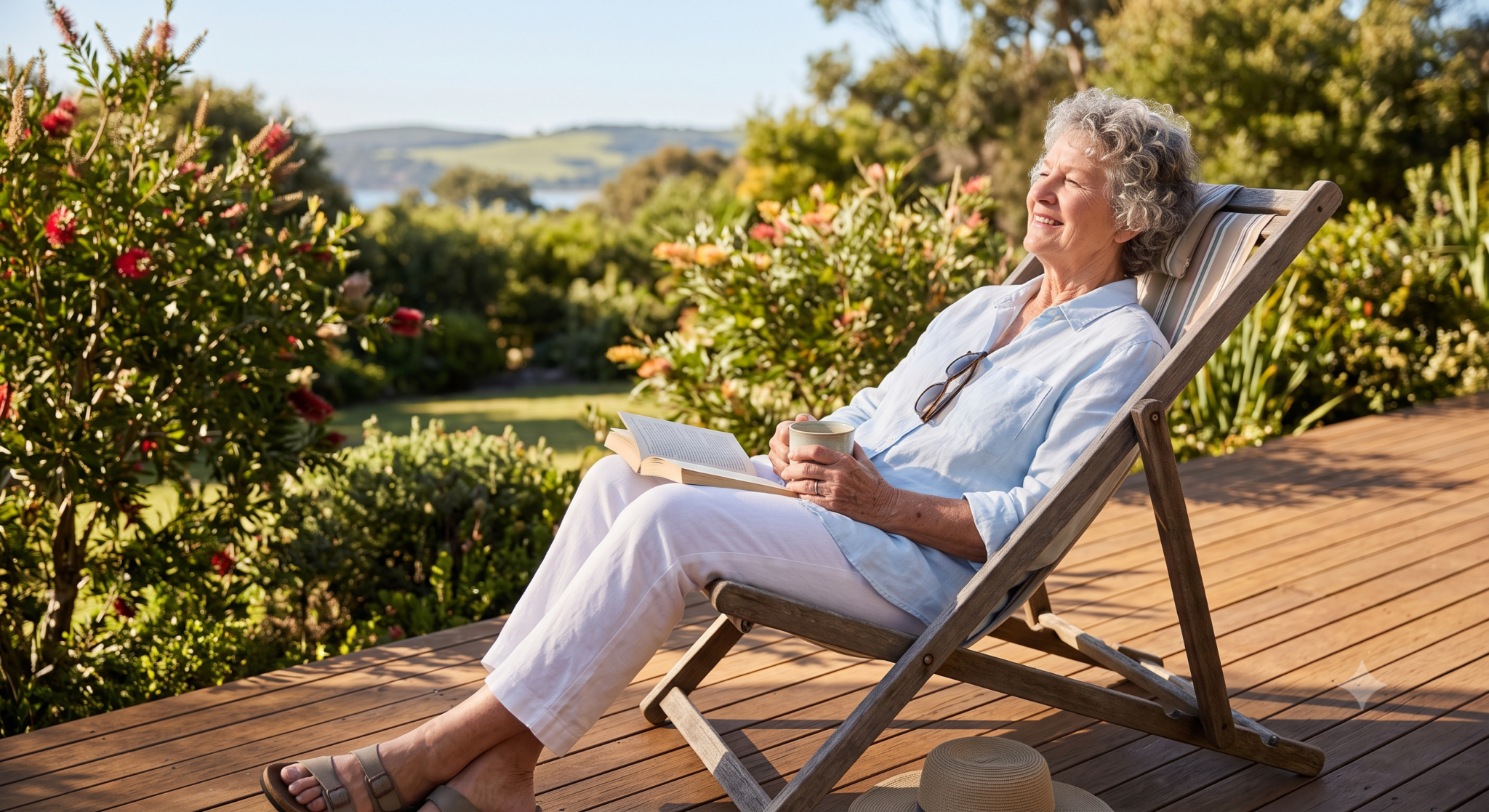
One of the questions I get asked more than you might expect from women approaching retirement is not about their super balance. It is: what will I actually do with my days? After years of work, raising children, and managing a household, the idea of completely unstructured time can feel as daunting as it sounds appealing.
It is a fair question. And the honest answer is that retirement looks different for everyone, but the research gives us a pretty clear picture of what Australian retirees actually do — and what tends to make that time feel well spent.
Average daily leisure time for Australians aged 65+
(ABS Time Use Survey)
Most leisure time of any age group in Australia
Most popular physical activity among Australian retirees by a significant margin
The Data on How Retirees Spend Their Time
The Australian Bureau of Statistics records how Australians across all age groups spend their time. Australians aged 65 and over spend an average of 6.5 hours per day on leisure activities — more than any other age group. That is a significant amount of time to fill, and what fills it matters for both mental and physical health.
The most common activities reported by Australian retirees are physical activity, social connection, hobbies and creative pursuits, travel, volunteering, and for a growing number, part-time or casual work. These are not mutually exclusive, and most retirees move between several of them across the course of a week.
Physical Activity and Health
Physical activity is one of the most consistent features of Australian retirement life. Walking is the most popular by a significant margin, but swimming, golf, yoga, cycling, gym sessions, and bowls all feature regularly. Research from the Australian Institute of Health and Welfare consistenly shows that retirees who maintain regular physical activity report better physical and mental health outcomes than those who don’t.
For many people, the daily walk or gym session provides something that work used to give them: structure. A starting point for the day, a routine, a reason to get out of the house. Group activities like walking groups, community sport, and fitness classes add a social dimension that solo exercise does not.
Hobbies and Creative Pursuits
Retirement gives people time to return to hobbies they put aside during working life, or to discover entirely new ones. Gardening is one of the most common, along with painting, woodworking, reading, photography, cooking, fishing, and learning new skills. University of the Third Age programs, which offer low-cost learning opportunities specifcally for retirees, are popular across Australia and cover everything from languages to history to digital literacy.
Hobbies with a learning component — skills that develop over time — tend to produce more sustained satisfaction than passive leisure activities. The people who report the highest life satisfaction in retirement are not the ones watching the most television. They are the ones engaged in things that are genuinely absorbing.
Family and Social Connection
Time with family is a significant feature of many Australian retirees’ days, particularly for grandparents. Childcare support for adult children is both a meaningful contribution and a source of purpose for many women in retirement. The Australian Women’s Budget Statement has noted that informal grandparent care is one of the most significant economic contributions older Australians make.
Social connection is one of the strongest predictors of retirement wellbeing. Retirees who maintain regular contact with friends, family, and community report significantly lower rates of loneliness and depression than those who become isolated.
This is particularly relevant for women who retire later in life, after a marriage ends or a partner passes — when social networks can shrink quickly without active effort to maintain them.
Volunteering and Community
Australia has one of the highest rates of volunteering in the world, and retirees are its backbone. Food banks, op shops, community gardens, sports clubs, hospitals, and schools all rely heavily on retired volunteers. For many people, volunteering fills the purpose gap that work leaves behind. It provides structure, social connection, and a sense of contributing to something beyond yourself.
In my experience, the women who find the transition to retirement most difficult are often the ones whose identity was heavily tied to their work. Volunteering can be a particularly useful bridge — it keeps the sense of usefulness alive while allowing the pace and schedule of working life to ease gradually rather than stop abruptly.
Part-Time Work and Un-Retirement
A growing number of Australian retirees are choosing what researchers call ‘un-retirement’ — returning to part-time or casual work after fully retiring, or never fully retiring at all. The reasons are both financial and personal. Part-time work provides supplementary income, which extends how long super lasts. It also provides structure, social engagement, and the mental stimulation that full-time leisure does not always deliver.
Even modest income in the early years of retirement can meaningfully reduce the drawdown on a super balance. $15,000 to $20,000 a year from part-time work during the 60 to 67 gap before the Age Pension begins can preserve tens of thousands in compounding growth.
What Makes Retirement Fulfilling
The research is fairly consistent on this. Retirement satisfaction is highest among people who planned for it actively — not just financially, but personally. They had a sense of what they wanted their days to look like before they got there. They maintained social connections deliberately. They kept moving physically. And they had at least one thing in their life that gave them a sense of purpose beyond leisure.
The financial security matters enormously — I am not dismissing that. Retirees with adequate super report significantly lower stress and higher wellbeing than those who are financially stretched. But above a certain floor, more money does not produce proportionally more happiness. What produces more happiness is what you do with your time.
Plan for both. The financial side and the personal side.
Want a retirement with genuine options?
My Money Makeover covers super, savings, and the complete money system you need to build the financial foundation for the retirement you actually want.
Jen Richardson
Jen is an accountant, business coach, and former financial planner with 30+ years in financial services. She founded jenrichardson.co to give Australian women the financial education they were never taught — straight-talking, no-BS, and built for real life.
Frequently Asked Questions
According to the Australian Bureau of Statistics, Australians aged 65 and over spend an average of 6.5 hours per day on leisure activities — more than any other age group. The most common activities are physical exercise, time with family and friends, hobbies and creative pursuits, volunteering, and for a growing number, part-time or casual work.
Walking is the most popular physical activity among Australian retirees. Gardening, reading, and learning new skills are common hobbies. Volunteering at food banks, op shops, sports clubs, and schools is widespread. A growing trend called un-retirement sees many retirees returning to part-time work for both financial and personal reasons.
Physical activity is the most consistent feature of Australian retirement life — walking above all else, followed by swimming, golf, yoga, cycling, and bowls. University of the Third Age programs are popular for continued learning. Grandchild care is a significant daily activity for many retirees, and volunteering is embedded in Australian retirement culture.
Research consistently shows that retirees who plan for how they will spend their time — not just their finances — report significantly higher life satisfaction. Boredom and loss of purpose are real risks for people who retire without a sense of what they are retiring toward. Maintaining social connection, physical activity, and at least one absorbing pursuit are the strongest predictors of retirement wellbeing.