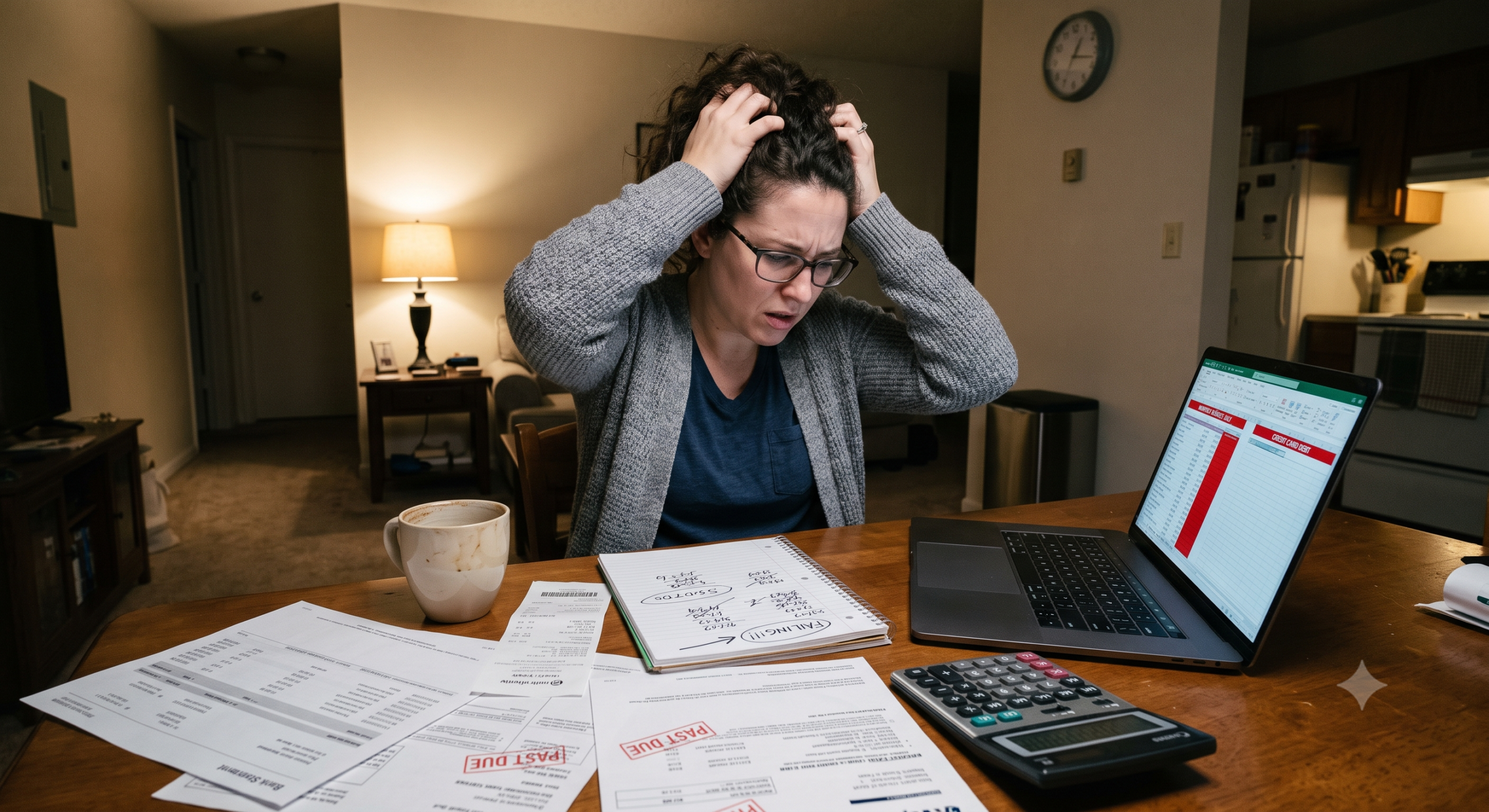
Divorce rewrites your financial life from the ground up. Two incomes become one, one home becomes two, and a plan built for a couple now has to work for a single person. Research suggests Australian women experience an income drop of between 21 and 30 percent after separation, and it can take up to six years to recover.
Recovery is possible, and it does not require starting from scratch in your 40s or 50s with nothing. It requires a clear-eyed look at where you stand, a spending plan that works for your actual income, and a few practical steps taken in the right order.
If you have just come through a separation, or you are still in the middle of one, this article is about the financial side. Not the legal advice — you need a family lawyer for that — but the practical money questions that come after the paperwork is signed.
How to Rebuild Your Finances After Divorce in Australia
I have worked with a lot of women who came to me at some point after a separation, and the pattern I see again and again is the same. The legal settlement is done, the dust has settled, and they are sitting with a financial situation they do not fully understand, a budget that was designed for two people, and a sense that they should somehow know how to do all of this. They don’t. Nobody told them. And the silence around money in a lot of marriages means that for many women, divorce is the first time they have had to manage their own finances entirely alone.
That is a confronting place to start. It is also a starting point, and starting points can be worked with.
The Financial Reality of Divorce for Australian Women
More than 48,000 divorces were granted in Australia in 2024. The median age for women at divorce was 43.1 years — meaning most women going through separation are doing it in the thick of their career years, often with dependents, often with a mortgage or rental commitments, and often without a full picture of the household finances they are suddenly responsible for managing alone.
Research puts the income drop for Australian women post-divorce at between 21 and 30 percent, and recovery can take up to six years. For older women the financial impact tends to be more severe, particularly if they spent years working part-time or stepping out of the workforce for family reasons. There is nothing abstract about that number. It means groceries, rent, school fees, and super contributions all need to be rethought from a different starting point.
I want to say clearly: this is recoverable. But it does require looking at the numbers honestly and building a plan that actually fits your new reality.
Step One: Know Exactly What You Have
Before you can build anything, you need to know what you are working with. That means sitting down with your actual financial picture — all of it. What accounts do you have in your name? What super balances? What debt is solely yours and what was joint? Do you have any income protection, life insurance, or savings that are fully in your control?
A lot of women discover at this stage that they had less visibility over the household finances than they realised. Joint accounts get closed or drawn down. Shared assets need to be formally divided. Super balances, which are often overlooked in property settlements, are actually part of the asset pool under Australian family law. A superannuation splitting order can be made as part of your settlement, transferring a portion from one partner’s account to the other. If super was not discussed in your settlement, it is worth getting advice on whether you have a claim.
Log in to myGov, link your ATO account, and check all super balances in your name. Then list every account, every debt, and every regular financial commitment. That list is your starting point.
Step Two: Build a Budget for One
The household budget you had during your marriage almost certainly doesn’t work anymore. Two incomes covered the mortgage, the groceries, the kids’ activities, and the family holiday. One income covers all the same expenses on half the revenue, and probably with two households worth of costs instead of one.
I work through this in detail with the women in My Money Makeover, but the core of it is the same regardless of where you are starting from. Write down every single thing coming in and every single thing going out. Be honest about what costs have changed — a family home may now be unaffordable on one income and childcare costs may have shifted. The number that surprises most people is how much of the old budget was shared costs that are now fully yours.
A spending plan built on your real income, with your actual fixed costs and a realistic amount for variables, is the first tool you need. Get this wrong and everything else is guesswork.
Step Three: Deal With Joint Debt and Accounts
Joint accounts and shared liabilities stay your problem until they are formally resolved. Your credit score does not care that you are no longer together. If a joint mortgage goes into arrears, it affects you. If a shared credit card is not paid, it shows on your record. This is one of the areas where people get caught out in the months after a settlement — they assume the other person is handling it.
Close joint accounts, or convert them to single names, as soon as practicable. Get your own transaction and savings accounts set up in your name. Check your credit file using a free service like Equifax or Experian so you can see exactly what is listed against you. Then work through any shared debt systematically and get formal written confirmation when things are transferred or closed.
Your financial identity going forward is yours alone, and the sooner it is clean and clearly in your control, the better positioned you are for the next chapter.
Step Four: Review Insurance and Estate Planning
This is one of the most commonly overlooked steps after divorce, and it can have serious consequences if you skip it. Your life insurance beneficiary is probably still your ex-partner. Your will almost certainly names them. Your superannuation death benefit nomination may do the same.
Update your will. Update your superannuation beneficiary nomination. Review your life insurance policy and check both the beneficiary and the level of cover — a single-income household often needs more cover than a dual-income household, particularly if you have children who depend on you. Review any income protection you hold and make sure it is still fit for purpose. These updates do not take long, and leaving them done gives you genuine peace of mind.
Step Five: Rebuild Your Super
Divorce hits super hard, particularly for women who already had a lower balance from career breaks or part-time work. A super split as part of a settlement may have reduced your balance further. Getting super back on track needs to be part of your rebuild plan, and the earlier you start the better compounding can work in your favour.
Even small additional contributions made consistently make a meaningful difference over time. Salary sacrifice is one of the most effective tools available — contributions go in before tax at 15 percent rather than your marginal rate, which means each dollar into super costs you less than a dollar from your take-home pay. If you earn under $62,488 and make personal after-tax contributions, the government co-contribution can add up to $500 to your super on top of that. These are not dramatic gestures. They are small, consistent actions that compound into something significant.
I used to say to clients that the goal in the first year after divorce is stability, not growth. Get the budget right, get the debts clear, get the insurance sorted. In year two, you start building. The order matters.
What Takes Time
Financial recovery after divorce is real, but it takes longer than most people expect and the path is rarely linear. Research suggests women take an average of six years to recover their pre-divorce income levels. That is not a reason for despair — six years is a long time and a lot can be built in six years with the right plan in place. What it is, is a reason to be patient with yourself and realistic with your timelines.
The women I have worked with who come out on the other side in the strongest position are the ones who stop trying to recreate the financial life they had and start building one that is genuinely theirs. A calm money system built around your real income, your actual goals, and your own priorities tends to feel better than the old budget ever did, because it was built by you for you.
There is something to be said for that.
Frequently Asked Questions
How long does it take to financially recover after divorce in Australia?
Research suggests Australian women take an average of six years to recover their pre-divorce income levels. The timeline varies depending on individual circumstances, but with a clear plan in place — including a realistic budget, debt management, and consistent super contributions — a lot can be built in that time.
How is super divided in a divorce?
Superannuation is part of the asset pool under Australian family law. A superannuation splitting order can be made as part of your property settlement, transferring a portion from one partner’s account to the other. If super was not discussed in your settlement, it is worth getting legal advice on whether you have a claim.
What should I do with my finances first after separation?
Start by getting a complete picture of your financial position: every account, super balance, debt, and regular commitment in your name. Then build a budget based on your actual single income and real expenses. Close or convert joint accounts, check your credit file, and update your will, insurance, and super beneficiary nominations.
Can I rebuild my savings after divorce in my 40s or 50s?
Yes. Recovery does not require starting from scratch. Even small additional super contributions made consistently make a meaningful difference over time thanks to compounding. Salary sacrifice, government co-contributions for eligible earners, and a realistic spending plan built around your actual income are all practical tools that work at any age.
This article contains general financial information only and is not personal financial advice. Your financial situation is unique. Before making any financial decisions, please consider whether this information is appropriate for your circumstances and seek advice from a qualified financial professional if needed.
If you are ready to build a money system that works for your real life — including a module on super in plain English — My Money Makeover is my 7-module online program that takes you from awareness to a calm, practical money system.